
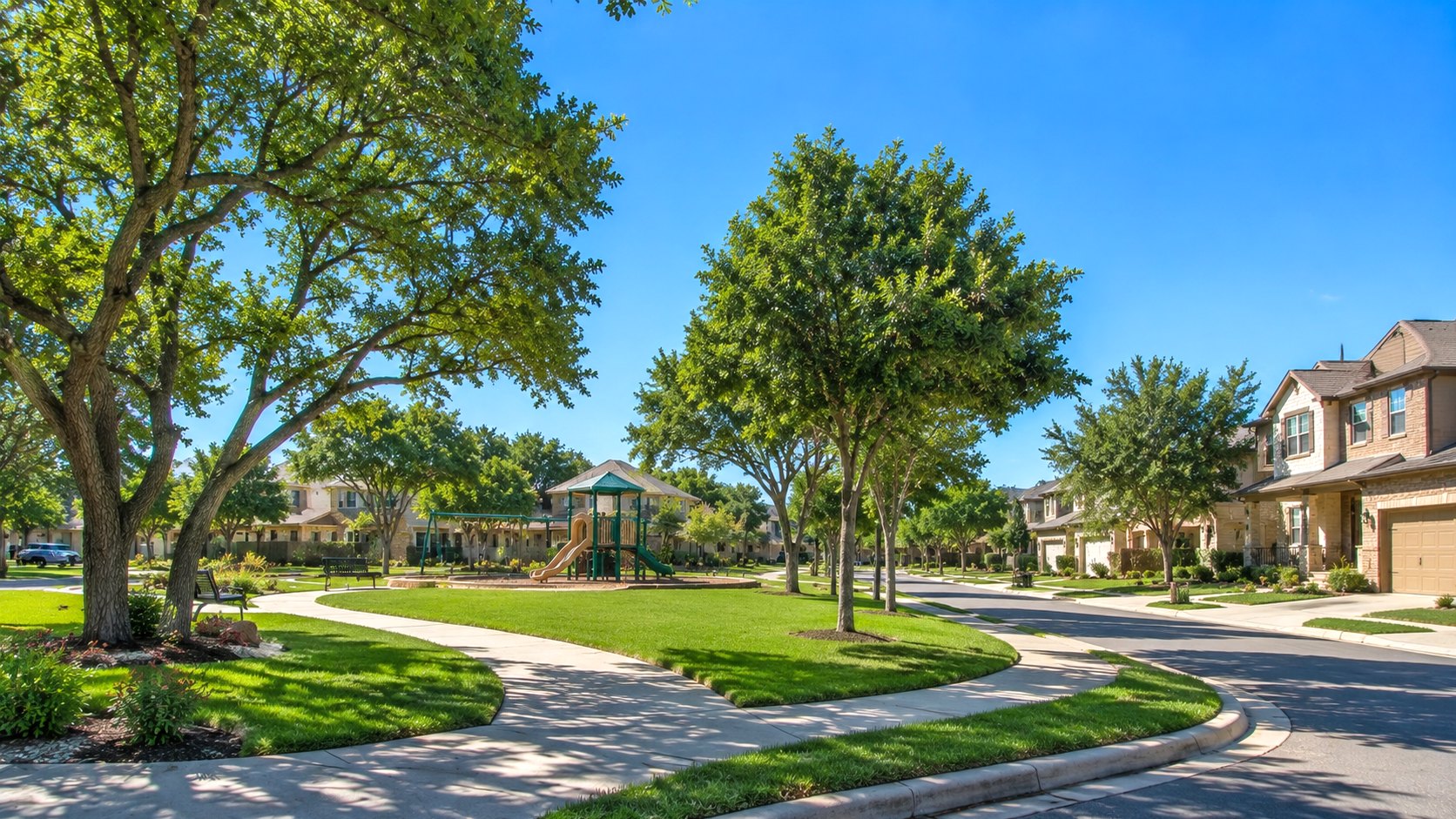
How should buyers compare San Antonio neighborhoods?
Compare neighborhoods on facts you can check: the commute corridor you will drive, the age and condition of the homes, lot size, HOA rules and dues, the property tax rate for the address, and the school district shown by official lookup tools. Bel shares where to find each fact, and the choice stays with you.
1. Commute corridor
Map your drive on the roads you would actually use: Loop 410, Loop 1604, I-10, I-35, US-281 and US-90 each serve different parts of the metro. Test the drive at the hours you would travel before you choose an area.
2. Home age and condition
The year built and improvement details are on the appraisal district record for the property (Bexar Appraisal District for Bexar County). Older homes may need roof, foundation, plumbing or electrical updates; newer subdivisions may carry HOA rules and builder warranties to review.
3. Lot size and HOA
Compare lot dimensions, easements and HOA covenants, dues and amenities. Ask for the HOA documents early and read them before your option period ends.
4. Property taxes
The total rate depends on the city, county, school district and any special districts for the address. Check the appraisal district record (Bexar Appraisal District, Comal Appraisal District, Guadalupe Appraisal District or Kendall Appraisal District) and the homestead exemption rules from the Texas Comptroller. More detail: San Antonio property taxes explained.
5. School district for the address
School district lines do not follow neighborhood names. Use the TEA School District Locator for an approximate district map, then confirm with the district’s own boundary tool. The San Antonio school districts guide explains how to look up an address.
Put it on a shortlist
Bel helps buyers narrow a search to a practical shortlist, then compare homes on these facts instead of photos. For area-by-area reading, see San Antonio neighborhoods compared, Stone Oak vs Alamo Heights, the areas and neighborhood guides, and comparing areas as a first-time buyer.
Sources checked October 3, 2026: appraisal district, Texas Comptroller and TEA sites linked above.
Equal Housing Opportunity. Information is provided for general real estate guidance and is not a guarantee of financing approval, property performance, neighborhood outcomes, or future market results.