
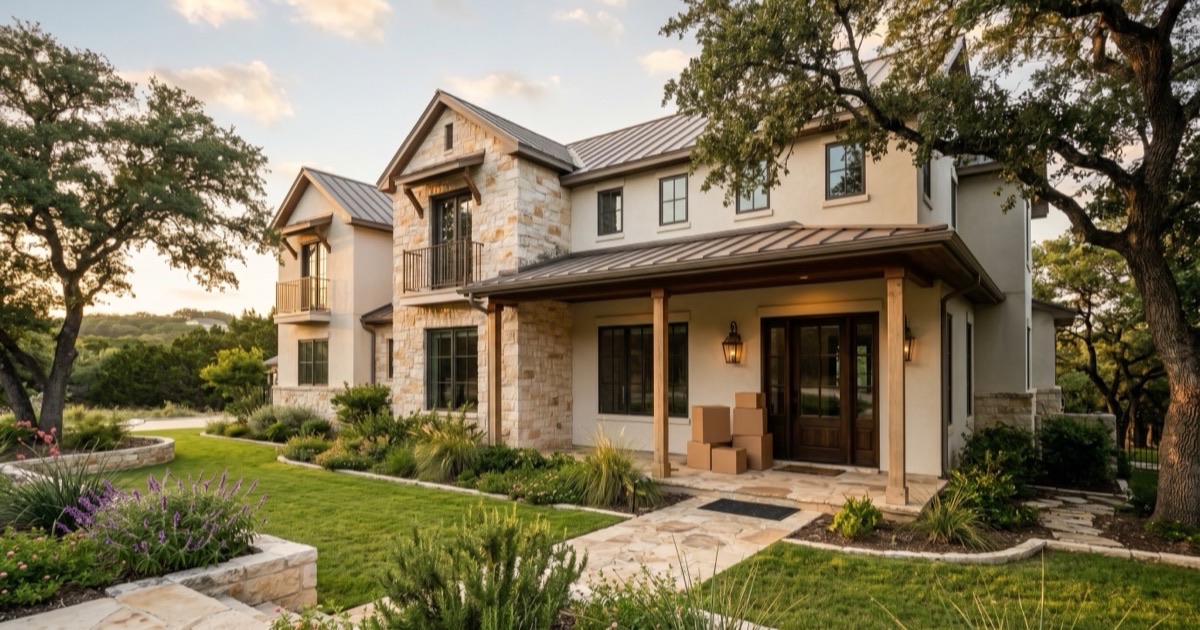

You have two basic paths: sell first, then buy (your budget is firm and your next offer is stronger, but you may need a short leaseback or temporary housing) or buy first, then sell (you move only once, but you usually need to carry two mortgages or use a bridge loan / HELOC). In San Antonio’s more balanced 2026 market, most move-up families do best with a coordinated sequence — often a home-sale contingency or a leaseback — so they avoid two house payments and avoid moving twice. The whole game is lining up your offer, financing, and closing dates with a Realtor who runs both transactions together. Run your real numbers before you list.
“Bel, we love our house — but we’ve outgrown it. How do we buy the next one without ending up with two mortgages or living out of a hotel?” That is one of the most common questions I get from San Antonio families, and it’s a good one. Buying and selling at the same time is one of the trickiest moves in real estate, because two transactions with two sets of dates, two lenders’ timelines, and two sets of nerves all have to line up. Do it well and you slide from one home to the next in a single weekend. Do it without a plan and you’re paying double or scrambling for a place to stay.
The good news: there’s a well-worn playbook for this, and in a balanced market like San Antonio’s in 2026 you have more room to negotiate the tools that make it work. This guide walks through your real options — in plain English and Spanish — so you can choose the path that fits your equity, your budget, and your stress tolerance. This is general guidance, not legal, tax, or lending advice; for your specific situation, we’ll map the numbers and dates together.
The real decision: sell first or buy first?
Almost everything about doing both at once comes down to this one fork in the road. Each direction solves one problem and creates another, and the right choice depends mostly on three things: how much equity you have, whether you can qualify to carry both homes for a short window, and how much risk and disruption you can stomach. Here’s the honest trade-off:
| Sell first, then buy | Buy first, then sell | |
|---|---|---|
| Biggest advantage | Firm budget; your equity is in hand; stronger, non-contingent offer | You move only once; you never miss the right home |
| Biggest risk | Needing somewhere to live between homes | Carrying two mortgages or financing costs until the old home sells |
| Common tool that fixes it | Leaseback / temporary lease, or short-term rental | Bridge loan, HELOC, or a sale contingency |
| Best when | Your equity funds the next down payment; inventory you like is available | You can qualify for both; the home you want is rare and competitive |
There’s no universally “right” answer — only the one that fits your numbers and your timeline. That’s the conversation we have before anything goes on the market.
Option A: Sell your San Antonio home first
Selling first is the lower-financial-risk path, and it’s the one I recommend most often for families whose equity in the current home is the down payment for the next one. Once your home is sold (or under a strong contract), you know exactly how much cash you’re bringing, your lender can fully approve you, and you can write an offer with no home-sale contingency — which in a balanced market is a real competitive edge.
The catch is obvious: where do you live between closings? Three answers solve it most of the time:
- Leaseback (rent-back). You close the sale but rent your home back from the new owner for a short stretch — in Texas this is the TREC Seller’s Temporary Residential Lease, commonly used for up to about 90 days. It buys you time to close on the next home without moving twice.
- A longer option period or later closing date negotiated into your sale, so the two closings land close together.
- A short-term rental or family stay if you’d rather sell, bank the equity, and shop with zero pressure.
If selling is your starting point, my 10 local tips to sell your San Antonio home fast will help you list strong and shorten that in-between window, and pricing it to today’s San Antonio market keeps the sale on schedule.
Option B: Buy your next home first
Buying first removes the “where do we live?” problem entirely — you move once, on your schedule, into the home you actually want. It’s the right call when the home you’re after is rare (a specific street in Stone Oak, a particular floor plan in Alamo Ranch, an acre in the Boerne or New Braunfels corridor) and you don’t want to lose it while you sell. The price of that certainty is financial: until your old home sells, you’re responsible for both.
Buyers bridge that gap a few ways:
- Qualify for both mortgages. If your income and debt-to-income allow it, a lender may approve the new loan while you still own the first home. Cleanest, but not everyone qualifies.
- Bridge loan. Short-term financing that taps your current equity for the new down payment, repaid when the old home sells. Fast and flexible, but it carries costs — confirm terms with your lender.
- HELOC opened before you list. A home equity line of credit on your current home can fund the next down payment. Note that many lenders won’t open a new HELOC once the home is listed, so set it up early.
Because every one of these depends on real approval and real rates, I have my buyers confirm the numbers with a trusted local lender first. The Consumer Financial Protection Bureau has plain-language explainers on these loan types worth reading before you commit.
The tools that let you do both at once
Whichever direction you choose, a handful of contract and financing tools are what actually make a simultaneous move work. Here’s the cheat sheet I keep for my San Antonio clients:
| Tool | What it does | Best for |
|---|---|---|
| Home-sale contingency | Makes your purchase contingent on your current home selling (TREC Addendum for Sale of Other Property by Buyer) | Buyers who need their sale proceeds and can’t carry two homes |
| Leaseback / temporary lease | You sell and close, then rent your home back briefly (often ≤ 90 days) | Sellers who need a few weeks to land and close on the next home |
| Bridge loan | Short-term loan against current equity for the new down payment | Buyers who must buy first and will sell soon after |
| HELOC (opened early) | Line of credit on current home to fund the next purchase | Buyers planning ahead who set it up before listing |
| Coordinated / back-to-back closings | Both closings scheduled within days of each other | Almost everyone — the goal we build the timeline around |
Contract forms referenced are Texas Real Estate Commission (TREC) promulgated forms; financing options depend on lender approval. Confirm specifics with your agent, lender, and where needed a Texas attorney.
How San Antonio’s 2026 market shapes your move
Strategy doesn’t happen in a vacuum — it bends to the market. During the ultra-competitive years, sellers could reject anything with a contingency, which made buying-first or selling-first-with-a-leaseback almost mandatory. San Antonio’s 2026 market is more balanced: homes are sitting a little longer, inventory is healthier, and many sellers will again consider a reasonable, well-documented contingency — especially when your current home is priced right and clearly going to sell. That shift gives move-up families options they didn’t have a couple of years ago.
It cuts both ways, though: a more balanced market also means your own home may take a bit longer to sell, so the in-between plan matters more. For the current local picture, see my San Antonio housing market forecast for 2026 and the latest market update — we’ll use real, current days-on-market data for your specific neighborhood, not a national headline.
A realistic timeline for doing both
Here’s the sequence I build with move-up clients so the two deals support each other instead of colliding. Yours will flex, but the shape holds:
| Stage | On the sell side | On the buy side |
|---|---|---|
| Weeks 1–2 | Lender pre-approval; prep, photos, pricing strategy | Define must-haves, budget, and target areas |
| Weeks 2–4 | List and market your home | Tour actively; line up your financing tool (bridge/HELOC/contingency) |
| Weeks 4–6 | Review offers; negotiate price + leaseback if needed | Write your offer with the right contingency/financing in place |
| Weeks 6–8 | Option, inspection, appraisal on your sale | Option, inspection, appraisal on your purchase |
| Closing window | Close your sale | Close your purchase — ideally back-to-back, with leaseback as the buffer |
Illustrative timeline only; actual dates depend on your lender, the contracts, and the market. The point is that the two tracks are managed together from day one.
Costs and pitfalls to plan for
Two transactions mean two sets of closing costs and, often, some overlap expense. Budget early for these so nothing is a surprise at the table:
- Two sets of closing costs — selling costs (commissions, title, prorations) on one side and buyer closing costs on the other. Build them into your equity math up front.
- Possible overlap — a few weeks of two mortgages, bridge-loan fees, or leaseback rent. Know the number before you commit to a path.
- Moving and storage — one move if you plan it well, two (plus storage) if the timing slips. Coordinated closings are how you keep it to one.
- Don’t over-promise a closing date you can’t control on the other transaction; we negotiate flexible dates and a leaseback buffer instead.
Wherever your equity needs a boost to make the next purchase work, my guides to down payment assistance in San Antonio and overall cost-of-living budgeting are useful companions, and first-time-to-move-up families often still benefit from the fundamentals in my San Antonio home buyer guide.
How I coordinate both sides for you
The reason families hand this to one agent is simple: when the same Realtor runs the listing and the purchase, the two timelines are designed to fit from the start — not stapled together at the end. Here’s what that looks like with me:
- One game plan, both transactions. Pricing your sale and targeting your purchase are decided together, around the same calendar.
- The right tool selected early — contingency, leaseback, bridge, or HELOC — based on your real numbers and lender approval.
- Closing dates negotiated to align, with a leaseback or flexible date as the safety buffer so you move once.
- Every step explained in plain Spanish or English, so a complicated move never gets lost in translation.
You can see how I work as a bilingual Realtor in San Antonio and a Spanish-speaking Realtor in San Antonio, or learn more about me as your San Antonio real estate agent. Every move-up situation is different, so the best first step is a quick, no-pressure conversation about your numbers and your timeline.
Ready to move up without the chaos?
Let’s map your sale and your next purchase on one timeline — and pick the financing tool that keeps you to a single move. No pressure, no obligation. Se habla español.
Call or text (210) 932-3606Frequently asked questions
Should I sell my home before buying another one in San Antonio?
It depends on your equity, your budget, and your comfort with risk. Selling first gives you your equity in hand and a firm budget, and it makes your next offer stronger because it carries no home-sale contingency — but you may need a leaseback or temporary housing while you find the next home. Buying first lets you move only once and never lose your dream home, but it usually means qualifying for two mortgages at the same time or using a bridge loan or HELOC. Most San Antonio move-up families I work with sell and buy in one coordinated sequence — often with a sale contingency or a short leaseback — so they avoid two house payments and avoid moving twice. The right answer comes from your actual numbers, which we run together before you list.
What is a home-sale contingency, and will San Antonio sellers accept one in 2026?
A home-sale contingency means your offer to buy the new home depends on your current home selling first; in Texas this is handled with the TREC Addendum for Sale of Other Property by Buyer. It protects you from owning two homes at once, but it makes your offer weaker than a non-contingent one. Whether a San Antonio seller accepts it depends on the specific home and the market: in the more balanced 2026 market, sellers are generally more open to a reasonable, well-documented contingency than they were during the frenzied years — especially when your current home is priced right and likely to sell quickly. I strengthen these offers by getting your home list-ready and pre-marketed so the seller sees a short, believable timeline.
What is a leaseback (rent-back) and how does it help me buy and sell at once?
A leaseback — in Texas, a TREC Seller’s Temporary Residential Lease — lets you sell and close on your current home but stay in it for a short period (commonly up to 90 days) by renting it back from the new owner. It is one of the most useful tools for a move-up family: you receive your sale proceeds to use as a down payment, you can make a stronger non-contingent offer on your next home, and you avoid moving twice or into temporary housing. The buyer of your home has to agree, and there are daily-rate and deposit terms to negotiate, which is part of what I handle for you.
Can I use a bridge loan or HELOC to buy in San Antonio before I sell?
Often yes, if you qualify. A bridge loan or a home equity line of credit (HELOC) lets you tap the equity in your current home for the down payment on the next one, so you can buy first and sell afterward. It is a powerful way to win a home without a sale contingency, but it adds cost and you typically carry both properties briefly, so it has to fit your budget and your lender’s approval. I always have you confirm the real terms and monthly numbers with a trusted local lender before we rely on this path. Verify current rates and qualification directly with your lender.
Does Bel the Realtor help San Antonio families buy and sell a home at the same time?
Yes. I’m Maribel “Bel” Thanadabouth, a bilingual (English/Spanish) San Antonio Realtor, and coordinating a simultaneous sale and purchase is one of the things I do most for move-up families across Bexar County and the Hill Country. I line up your listing, your next-home search, your financing option, and your closing dates so the two transactions work together instead of against each other. Call or text (210) 932-3606. Se habla español.