
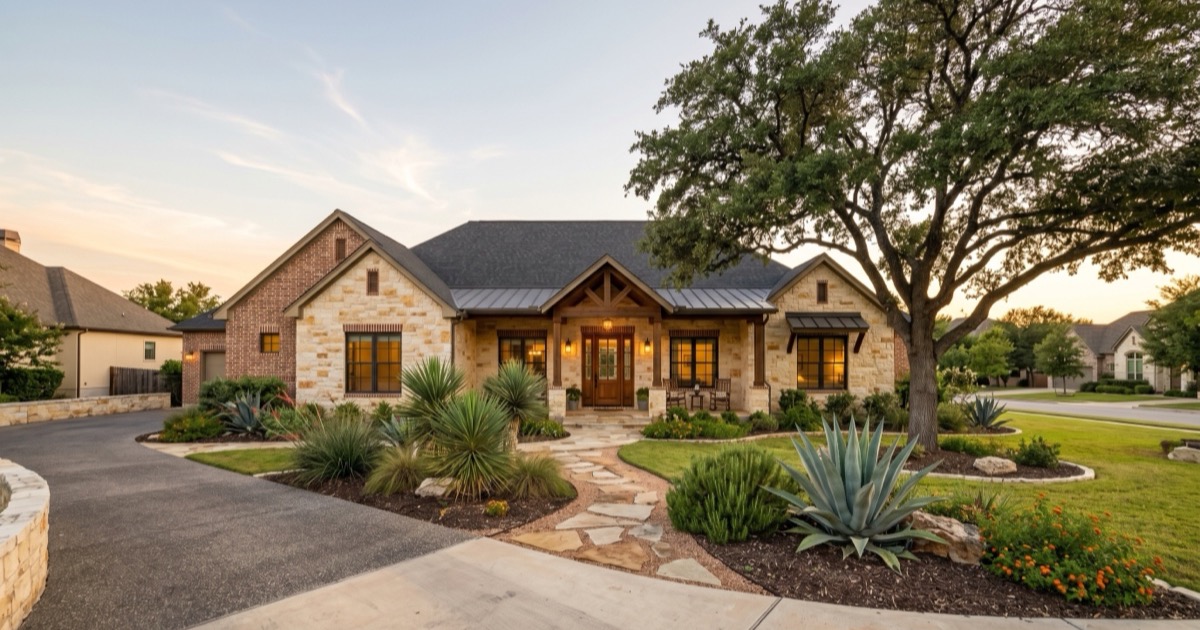

Before you tour a single San Antonio home, get pre-approved — not just pre-qualified. Pre-approval means a lender pulls your credit, verifies your income and assets with real documents, and gives you a written letter for a specific loan amount. To get it, gather your ID, two years of income (W-2s/1099s/returns), recent pay stubs, and bank statements, then apply with a trusted local lender. One San Antonio twist most guides miss: Texas has no state income tax but high property taxes, so a bigger slice of your monthly payment goes to taxes and escrow — which lowers the loan amount you qualify for. Knowing that up front keeps your home search realistic. I connect you with strong local lenders and run the numbers with you first.
“Bel, we found the perfect house — can we go see it this weekend?” I love that energy, and my honest answer is always the same: let’s get your pre-approval in hand first. In San Antonio’s 2026 market, walking into a showing or writing an offer without a real pre-approval letter is like showing up to a closing with no shoes — you’re just not ready, and sellers know it. A strong pre-approval is what turns “we’re thinking about buying” into “we’re buyers,” and it’s the very first thing I set up with every client.
This guide walks through exactly how mortgage pre-approval works here — the difference between pre-qualification and pre-approval, the documents you’ll need, the step-by-step process, and a local detail that trips up a lot of buyers: how Texas property taxes quietly shrink the loan you qualify for. It’s written in plain English and Spanish, because money decisions should never get lost in translation. This is general guidance, not lending, tax, or legal advice — your lender will give you your real, personalized numbers, and I’ll help you make sense of them.
Pre-qualification vs. pre-approval: what’s the difference?
People use these two words like they mean the same thing. They don’t, and the gap matters a lot when you’re competing for a home. Pre-qualification is a quick estimate based on numbers you tell the lender — nothing is verified. Pre-approval is a documented, credit-checked, written commitment for a specific amount. Here’s the honest comparison:
| Pre-qualification | Pre-approval | |
|---|---|---|
| What the lender checks | Numbers you state; soft or no credit pull | Credit report + verified income, assets, and debts |
| How long it takes | Minutes, often online | Usually 1–3 business days once docs are in |
| What you get | A rough price range | A written letter for a specific loan amount |
| Weight with sellers | Low — easily inflated | High — shows a lender already vetted you |
| Best used for | Very early budgeting | Touring homes and making offers |
In a balanced 2026 market, many San Antonio listing agents won’t even schedule a showing without a pre-approval letter attached. Get the real thing.
Why pre-approval matters so much in San Antonio
A pre-approval does three things at once, and all three protect you. First, it tells you your true budget — not the dream number, the real one a lender will fund — so you shop in the right price band instead of falling for homes you can’t finance. Second, it makes your offer credible; when two offers land on a Stone Oak or Alamo Ranch listing, the one with a solid pre-approval almost always beats the one with a vague “we’re working on financing.” Third, it surfaces problems early — a credit ding, a documentation gap, a debt that needs paying down — while there’s still time to fix them, not the week before closing.
It also sets the pace of everything that follows. Once you’re pre-approved, we can move fast when the right home appears, write a clean offer, and hit your option and closing dates with confidence. If you’re brand new to all this, pair this guide with my San Antonio first-time home buyer guide for the full path from pre-approval to keys.
The documents you’ll need to get pre-approved
Pre-approval moves at the speed of your paperwork. The buyers who get a letter in a day or two are the ones who walk in with everything ready. Here’s the standard checklist I send my clients before they apply:
- Photo ID and your Social Security number or ITIN.
- Two years of income history — W-2s for employees, 1099s for contractors, and often one to two years of federal tax returns.
- Your two most recent pay stubs (or year-to-date proof of income).
- Two to three months of bank and asset statements — checking, savings, and any retirement or investment accounts you’ll use for the down payment.
- Records of other income if it applies — child support, Social Security, rental income, etc.
A few buyers have extra paperwork. Self-employed buyers usually add two years of personal and business returns plus a profit-and-loss statement. Military buyers using a VA loan add a Certificate of Eligibility (more on that in my San Antonio VA loan guide). ITIN buyers use alternative documentation through portfolio lenders — see my ITIN home loans in San Antonio guide. Put it all in one folder before you apply; it’s the single biggest time-saver in the whole process.
How to get pre-approved, step by step
Here’s the actual sequence I walk buyers through. None of it is hard — it just has to happen in order.
- Check your credit first. Pull your own reports and scores so there are no surprises. Small fixes — paying down a card, disputing an error — can move your rate or your approval before a lender ever looks.
- Figure out your comfortable payment, not just the max. Lenders tell you the most you can borrow; decide what you actually want to spend per month. My San Antonio cost-of-living guide helps you budget the whole picture.
- Choose a lender (or two). Compare a local lender, a credit union, and a mortgage broker. I’ll connect you with trusted San Antonio lenders who handle first-time, VA, ITIN, and self-employed files well.
- Submit your application and documents. Complete the application and hand over the checklist above. The lender pulls credit and verifies everything.
- Get your pre-approval letter — and read it. It names a specific loan amount, loan type, and conditions. We’ll use it to set your search range and to back your offers.
- Keep your finances frozen. Until you close, don’t change jobs, finance a car, or open new credit. Any of those can undo your approval at the worst possible moment.
The Texas twist: how property taxes shrink your approval
This is the part national mortgage articles never mention, and it’s the one that changes the math in San Antonio. Texas has no state income tax — great for your paycheck — but it pays for that with some of the highest property taxes in the country. Across Bexar County, combined property tax rates commonly land around 2% of a home’s value per year, and in newer communities with a MUD or PID district the effective rate can run higher still.
Why does that matter for pre-approval? Because lenders don’t just look at principal and interest — they qualify you on your full monthly housing payment, PITI: Principal, Interest, property Taxes, and homeowners Insurance, most of it collected in an escrow account. In a high-tax county, the “T” takes a big bite, which means less of your monthly budget is left for principal and interest — so the loan amount you qualify for is smaller than it would be in a low-tax state at the same monthly payment. Here’s an illustrative example of the same buyer, same ~$2,500/month housing budget, in two different tax environments:
| Monthly housing budget (PITI) | Low-tax state (~1.0%) | Bexar County (~2.0%) |
|---|---|---|
| Goes to taxes + insurance | Smaller share | Larger share |
| Left for principal & interest | More | Less |
| Home price you can support | Higher | Lower for the same monthly payment |
Illustrative only — not a quote. Your real numbers depend on the exact tax rate for the property, your rate, insurance, down payment, and loan type. The takeaway: in San Antonio, always ask your lender to qualify you on full PITI for the specific area you’re shopping, and remember that filing your homestead exemption later helps. My San Antonio property taxes guide breaks down how the rates and exemptions work.
The good news cuts the other way too: because there’s no state income tax, many San Antonio buyers have more take-home pay to support a payment than they’d have in a high-income-tax state. The point isn’t that Texas is expensive — it’s that you need to qualify on local numbers, not a national calculator.
Special situations: ITIN, self-employed, military, and first-time buyers
San Antonio is a wonderfully diverse market, and “getting pre-approved” looks a little different depending on who you are. A few of the most common situations I help with:
- ITIN buyers. No Social Security number is required to own a home in Texas. ITIN buyers get pre-approved through portfolio lenders, usually with a larger down payment and alternative income documentation. Full details in my ITIN home loans guide.
- Self-employed buyers. You can absolutely qualify, but lenders use your net income after write-offs across two years of returns. If you deduct aggressively, your qualifying income may be lower than your bank balance suggests — worth planning for a year ahead.
- Military and veteran buyers. With our JBSA bases — Lackland, Fort Sam Houston, and Randolph — VA loans are huge here. Pre-approval adds a Certificate of Eligibility and can mean zero down. See my VA loan guide for San Antonio.
- First-time buyers. You may qualify for down payment assistance that changes your whole budget. Get pre-approved and check my San Antonio down payment assistance guide so you know every dollar available to you.
For trustworthy, plain-language explainers on loan types and the mortgage process, the Consumer Financial Protection Bureau is a great neutral resource to read alongside this guide.
How long it lasts and the mistakes to avoid
A pre-approval letter is usually good for about 60 to 90 days, because credit reports, pay documents, and rates all age out. If your search runs longer, your lender simply refreshes it. The bigger risk isn’t expiration — it’s changing your financial picture mid-search. The classic ways buyers accidentally blow up their own approval:
- Financing a new car or furniture before closing — new debt changes your debt-to-income ratio.
- Opening or closing credit cards, or running up balances, which moves your score.
- Changing jobs or going from salaried to self-employed right before closing.
- Making large, unexplained deposits that the lender has to source and document.
The rule is simple: once you’re pre-approved, keep your finances boring until you have keys. If something has to change, tell your lender and me first so we can protect your approval.
How I help you get pre-approved and ready to buy
I’m not a lender, and I’ll never try to sell you a loan — my job is to make sure you’re working with a strong one and that your pre-approval is solid before we ever write an offer. Here’s what that looks like with me:
- The right lender match. I connect you with trusted local lenders who handle VA, first-time, ITIN, and self-employed files every day — not a 1-800 call center.
- Document coaching. I help you assemble the checklist so your pre-approval comes back fast and clean.
- Real local math. We qualify you on full PITI for the specific San Antonio areas you’re shopping, property taxes included, so your budget is honest from day one.
- Everything in plain Spanish or English, so nothing about your financing gets lost in translation.
You can learn how I work as your San Antonio real estate agent, as a bilingual Realtor in San Antonio, or as a Spanish-speaking Realtor in San Antonio. The best first step is a quick, no-pressure conversation — we’ll talk through your situation and get your pre-approval started.
Ready to get pre-approved the right way?
Let’s connect you with a trusted local lender, get your real budget in writing, and have you offer-ready before the right San Antonio home appears. No pressure, no obligation. Se habla español.
Call or text (210) 932-3606Frequently asked questions
What is the difference between mortgage pre-qualification and pre-approval in San Antonio?
Pre-qualification is a quick, informal estimate. You tell a lender your income, debts, and assets, they do a soft check, and they give you a rough price range. It is useful early on, but it is not verified, so San Antonio sellers do not give it much weight. Pre-approval is the real thing: the lender pulls your credit, verifies your income and assets with actual documents, and issues a written conditional commitment for a specific loan amount. That letter is what makes your offer competitive, because it tells the seller a lender has already checked your numbers. For any serious home search in Bexar County in 2026, get pre-approved, not just pre-qualified.
How long does a mortgage pre-approval last in San Antonio?
Most pre-approval letters are valid for about 60 to 90 days. They expire because the lender's decision is based on a credit report and pay and asset documents that go stale, and because rates move. If your home search runs longer than that, your lender can refresh the letter by re-pulling credit and updating your documents, which is usually quick. The bigger thing is to keep your finances frozen in place while you shop: do not change jobs, finance a car, or open new credit cards, because any of those can change your approval right before closing. If anything in your situation changes, tell your lender and me early so we can adjust.
What documents do I need to get pre-approved for a home loan in San Antonio?
For a standard pre-approval, lenders typically ask for: photo ID; Social Security number or ITIN; two years of W-2s or 1099s; your two most recent pay stubs; two to three months of bank and asset statements; and often one to two years of tax returns. Self-employed buyers usually provide two years of personal and business returns plus a profit-and-loss statement. Military buyers using a VA loan add their Certificate of Eligibility and, if applicable, a DD-214. ITIN buyers use alternative documentation through portfolio lenders. Having these ready in one folder before you apply is the single biggest thing that speeds up pre-approval, and it is something I help my clients organize.
Can I get pre-approved for a mortgage in San Antonio with an ITIN or if I am self-employed?
Yes to both. ITIN buyers without a Social Security number can be pre-approved through portfolio and ITIN-specific lenders, usually with a larger down payment and alternative proof of income; I cover this in my ITIN home loans guide. Self-employed buyers absolutely qualify too, but lenders look at your net income after write-offs across two years of tax returns, so heavy deductions can lower the amount you qualify for even when your business is healthy. Both situations are common in San Antonio, and both come down to working with a lender who handles them often. As a bilingual Realtor, I connect buyers with trusted local lenders who specialize in ITIN and self-employed files, and I help you present your income clearly. Confirm program details and current terms directly with the lender.
Does Bel the Realtor help San Antonio buyers get pre-approved and connect with lenders?
Yes. I am Maribel Bel Thanadabouth, a bilingual (English/Spanish) San Antonio Realtor, and getting buyers properly pre-approved is the first thing we do together before touring homes. I connect you with trusted local lenders, including ones who handle VA, first-time-buyer, ITIN, and self-employed files, help you gather the right documents, and explain how Texas property taxes affect the number you qualify for so there are no surprises. I never sell loans myself; I make sure you are working with a strong lender and that your pre-approval is real before we write an offer. Call or text (210) 932-3606. Se habla espanol.